15 Common Range Rover Evoque Problems
The Range Rover Evoque is a true head-turner, blending luxury, style and off-road capability into a compact SUV package that’s just as at home on the streets of Oldham as it is on a country lane. Its popularity with families and professionals across Manchester is a testament to its design and performance.
However, like any sophisticated vehicle, the Evoque has its own set of common quirks that owners should be aware of. Keeping on top of these can be the difference between a minor fix and a major headache. This guide is here to walk you through the most frequent issues, offering practical advice for every Evoque owner.
Got an Evoque gremlin we didn’t cover? Drop us a comment below!
1. Turbocharger Failure (2.2L Diesel Engines)

Range Rover Evoque Manchester
- Symptoms: A significant loss of power, excessive black or blue smoke from the exhaust and a loud whining or siren-like noise from the engine bay, especially under acceleration. You may also see an engine management warning light.
- Causes: This is a well-documented issue on pre-2015 models with the 2.2-litre diesel engine. The primary cause is often oil starvation due to a blocked oil feed pipe or internal bearing failure within the turbo unit itself.
- Fixes:
- The only reliable fix is a complete turbocharger replacement. It’s crucial to also replace the oil feed and drain pipes and perform a full engine oil and filter change to prevent immediate failure of the new unit.
- Replace the turbocharger assembly (a common part number is LR065510, but always verify with your vehicle’s VIN).
- Quick Tip: Ensure you use the correct specification engine oil and stick rigidly to service schedules. Allowing the engine to idle for 30-60 seconds before shutting it down after a long drive can also help prolong turbo life.
2. DPF (Diesel Particulate Filter) Blockage

Range Rover Evoque DPF Warning Light
- Symptoms: A DPF warning light on the dashboard, the vehicle entering “limp mode” (restricted power), poor fuel economy and a noticeable smell from the exhaust.
- Causes: The DPF is designed to capture soot and it “regenerates” (burns it off) during long, high-speed drives. Frequent short trips, like school runs around Bury or city driving in Manchester, prevent the DPF from reaching the required temperature to regenerate, causing it to block.
- Fixes:
- A professional forced regeneration can be carried out by a garage using diagnostic tools.
- In severe cases, the DPF may need to be professionally cleaned or replaced entirely (part number varies significantly by engine and year).
- Quick Tip: If you primarily drive short distances, make sure to take your Evoque for a 20-30 minute drive on a motorway or A-road at a steady speed of over 40 mph at least once or twice a month.
3. Timing Chain Rattle (Ingenium Engines)
- Symptoms: A distinct rattling or chattering noise from the engine, most noticeable on cold starts and at idle. If left unchecked, it can lead to engine management lights and catastrophic engine failure.
- Causes: The timing chains on the 2.0L Ingenium petrol and diesel engines (found in models from 2015 onwards) can stretch over time. The plastic chain guides can also wear out, creating slack.
- Fixes:
- This is a significant job that requires replacing the timing chains, tensioners and guides. It is an engine-out procedure in many cases.
- Use a full OEM timing chain kit for replacement (example part number for one of the chains is LR073763, but a complete kit is essential).
- Quick Tip: Regular oil changes with high-quality, manufacturer-approved oil are critical to lubricating the chain and tensioners, helping to maximise their lifespan.
4. 9-Speed Automatic Transmission Faults

Range Rover Evoque Engine
- Symptoms: Jerky or hesitant gear changes, a noticeable lurch when selecting Drive or Reverse, or getting stuck in a particular gear. A “Gearbox Fault” message may appear on the dash.
- Causes: These issues are often software-related on the ZF 9-speed gearbox. The transmission control module (TCM) may require an update to iron out shifting problems. In some cases, it can be a sign of low transmission fluid or internal mechanical wear.
- Fixes:
- Start with a diagnostic check to see if a software update is available. This is the most common fix.
- If software updates don’t resolve it, a transmission fluid level check and potential fluid change may be necessary.
- Quick Tip: Ensure any gearbox software updates are performed by a Land Rover specialist, as they have access to the latest manufacturer software (JLR Pathfinder).
5. Electrical Gremlins and Battery Drain
- Symptoms: The infotainment screen freezing or going blank, unresponsive buttons, random warning lights appearing or a battery that goes flat if the car is left unused for a few days.
- Causes: The Evoque has complex electrical systems. Software bugs are a common cause of infotainment issues. Parasitic battery drain can be caused by a faulty module that fails to shut down correctly after the ignition is switched off.
- Fixes:
- For infotainment issues, a hard reset (disconnecting the battery for 10-15 minutes) can sometimes help, but a software update at a dealership or specialist is often required.
- Diagnosing a parasitic drain requires a technician to measure current draw from the battery while systematically disconnecting fuses to isolate the faulty circuit.
- Quick Tip: If you don’t use your Evoque daily, consider using a trickle charger to keep the battery in optimal condition, especially during cold winters.
6. AdBlue System Faults
- Symptoms: A warning on the dashboard stating “Incorrect Diesel Exhaust Fluid quality detected” or a countdown of miles until the engine will not restart.
- Causes: This can be triggered by using poor quality AdBlue, a faulty AdBlue injector, a failed NOx sensor or a problem with the AdBlue tank heater. The system is sensitive and can throw errors easily.
- Fixes:
- A diagnostic scan is essential to pinpoint the exact cause.
- Repairs could involve cleaning or replacing the AdBlue injector (part number example LR071703), replacing a NOx sensor or the entire AdBlue tank assembly.
- Quick Tip: Only use AdBlue from a sealed container that meets the ISO 22241 standard. Avoid using pumps at petrol stations if possible, as contamination can occur.
7. Suspension Knocks and Rattles

Range Rover Evoque Suspension
- Symptoms: A knocking, clunking or rattling sound from the front or rear suspension, particularly when driving over bumps or uneven road surfaces.
- Causes: The most common culprits are worn anti-roll bar (sway bar) drop links or worn suspension arm bushes. Over time, the rubber components perish and develop excess play.
- Fixes:
- Identify the source of the noise through a physical inspection.
- Replace the worn components. Anti-roll bar drop links are a common and relatively inexpensive fix (front link example part number LR024473).
- Quick Tip: If you frequently drive on poorly maintained roads, have your suspension components checked during your annual service to catch wear early.
8. Power Tailgate Malfunctions
- Symptoms: The powered tailgate fails to open or close, stops halfway, or makes a grinding noise during operation. It may also refuse to latch correctly.
- Causes: The issue often lies with failing gas struts that have lost pressure, a faulty control module or a problem with the latching mechanism.
- Fixes:
- Check if the tailgate can be operated manually. If it feels extremely heavy, the struts have likely failed and need replacing.
- A diagnostic scan can check the tailgate control module for errors. Sometimes a recalibration procedure can resolve the issue.
- Quick Tip: Periodically clean the tailgate seals and latching mechanism to ensure no dirt or debris is obstructing its operation.
9. Oil Dilution in Diesel Engines
- Symptoms: The oil level on the dipstick or electronic gauge appears to be rising. You may also get a “Service Required” message sooner than expected.
- Causes: This is a side effect of the DPF regeneration process. To raise the exhaust temperature, extra diesel is injected. On an interrupted cycle (common with short trips), some of this unburnt fuel can seep past the piston rings and mix with the engine oil, diluting it and reducing its lubricating properties.
- Fixes:
- The only solution is to perform an oil and filter change. Running the engine with diluted oil can cause significant wear.
- Adhere to the DPF regeneration driving style tips mentioned earlier to minimise how often this occurs.
- Quick Tip: Check your oil level weekly. If you notice it rising, book an oil change immediately and explain your driving habits to your mechanic.
10. Water Leaks into the Boot

Range Rover Evoque Volksmaster Service Oldham
- Symptoms: A damp carpet, condensation on the inside of the windows or a musty smell inside the boot area, often discovered after heavy rain.
- Causes: Leaks are commonly caused by perished tailgate seals, blocked panoramic roof drains (if fitted) or poorly sealed rear light clusters.
- Fixes:
- Systematically check for the source of the leak. A hosepipe test can help identify the entry point.
- Clear any blocked roof drains using compressed air or a flexible wire.
- Replace damaged rubber seals or apply a suitable automotive sealant around light clusters or body seams.
- Quick Tip: Regularly clear leaves and debris from the channels around the boot lid and panoramic roof to ensure water can drain away correctly.
11. Haldex (AWD) System Failure
- Symptoms: The vehicle loses its four-wheel-drive capability, effectively becoming a front-wheel-drive car. You may see a “4×4/AWD system unavailable” message. This becomes very noticeable in slippery conditions.
- Causes: The Haldex coupling, which controls power to the rear wheels, has a small pump and filter. The filter can become blocked with sludge over time, causing the pump to burn out from strain.
- Fixes:
- The Haldex system requires servicing, which involves changing the oil and cleaning or replacing the filter.
- If the pump has failed, it will need to be replaced (pump kit part number example LR051321).
- Quick Tip: Land Rover does not specify a service interval for the Haldex system, but specialists recommend an oil and filter change every 20,000-40,000 miles to prevent failure.
12. EGR Valve Problems
- Symptoms: Poor engine performance, rough idling, increased emissions and the engine management light illuminating.
- Causes: The Exhaust Gas Recirculation (EGR) valve can become clogged with carbon deposits, causing it to stick open or closed. This disrupts the air-fuel mixture and affects performance.
- Fixes:
- In some cases, the EGR valve can be removed and professionally cleaned.
- If cleaning is not successful or the valve’s electronic part has failed, a full replacement is necessary (part number varies by engine).
- Quick Tip: Using high-quality fuel and occasionally using a reputable fuel system cleaner additive can help reduce the rate of carbon build-up.
13. Air Conditioning System Not Blowing Cold

Range Rover Evoque Dash
- Symptoms: The A/C system only blows ambient or warm air, even when set to the coldest temperature.
- Causes: The most common cause is a loss of refrigerant gas due to a leak in the system, often from the condenser (which is vulnerable to stone chips) or a perished seal. It can also be caused by a faulty compressor or pressure switch.
- Fixes:
- A technician will need to perform a leak test using nitrogen or a UV dye to find the source of the leak.
- Once the leaking component (e.g., condenser, part number example LR041295) is replaced, the system must be evacuated and recharged with the correct amount of refrigerant.
- Quick Tip: Run your A/C for at least 10 minutes every week, even in winter. This circulates the lubricant in the refrigerant, which keeps the seals from drying out and cracking.
14. Faulty Wheel Speed (ABS) Sensors
- Symptoms: Illumination of the ABS, Dynamic Stability Control (DSC) and Hill Descent Control (HDC) warning lights. The speedometer may also behave erratically.
- Causes: The wheel speed sensors are exposed to the elements and can fail due to corrosion, dirt build-up or damage to the wiring.
- Fixes:
- A diagnostic code reader will identify which specific sensor has failed.
- Replacement is straightforward: the old sensor is unbolted from the wheel hub and the new one is fitted.
- Replace the faulty sensor (front sensor example part number LR024202).
- Quick Tip: When cleaning your wheels, gently spray water around the hub area to rinse away dirt and road grime that can accumulate around the sensors.
15. Creaking Panoramic Roof
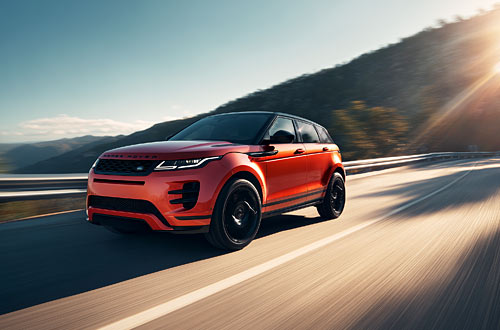
Range Rover Evoque Red
- Symptoms: A creaking, ticking or rattling noise coming from the roof area, especially when driving over uneven surfaces or when the body of the car flexes.
- Causes: The noise is usually caused by friction between the large glass panel and the vehicle’s body. Temperature changes can cause materials to expand and contract, making the noise more prominent.
- Fixes:
- The primary fix is cleaning the rubber seals around the glass panel and applying a special lubricant.
- A specialist silicone-based lubricant (e.g., Krytox GPL 105) should be applied to the seals. This reduces friction and stops the noise.
- In some cases, the roof may need to be realigned.
- Quick Tip: Keep the seals clean and lubricated as part of your annual maintenance routine to prevent the noise from starting.
FAQs: Your Range Rover Evoque Questions Answered

Range Rover Evoque Volksmaster Heywood
Here are some quick answers to the most common questions we hear from Evoque owners at our garages in Oldham, Bury and Heywood.
- How often should I service my Range Rover Evoque?
For models made after 2017, the service interval is typically every 21,000 miles or 24 months, whichever comes first. However, for vehicles used for frequent short trips or in harsh conditions, an annual oil change is highly recommended. - Is the Range Rover Evoque a reliable car?
The Evoque offers a fantastic driving experience but its reliability can be mixed, particularly with earlier models. Sticking to a rigorous maintenance schedule with a garage that understands the brand is the best way to ensure its longevity and avoid costly repairs. - What is the correct oil for an Evoque?
This is critical. Most Ingenium engines (post-2015) require a specific low-viscosity 0W-20 or 5W-20 oil meeting Jaguar Land Rover specification STJLR.03.5006 or similar. Always check your owner’s manual or consult a specialist, as using the wrong oil can cause serious damage. - Does the Evoque have a timing belt or chain?
All Evoque engines, both the earlier Ford/PSA-derived diesels and the later Ingenium units, use a timing chain, not a belt. While chains are designed to last the life of the engine, as noted above, they can be a point of failure on some models. - Why is my Evoque infotainment system so slow?
The InControl Touch and Touch Pro systems can suffer from software bugs. Often, the best solution is a software update performed by a dealer or specialist garage with the correct diagnostic equipment. - Is it expensive to maintain an Evoque?
As a premium vehicle, parts and labour can be more expensive than for a standard family car. However, using an independent specialist like Volksmaster instead of a main dealer can significantly reduce costs without compromising on the quality of parts or service.
Keep Your Evoque Running Smoothly

Volksmaster Reception
Whether you’re navigating Manchester’s busy streets or exploring the Peak District, spotting issues early is the key to keeping your Range Rover Evoque in top condition. Regular checks of your oil level, tyres and fluid levels, combined with listening out for any unusual noises, can save you a huge amount of time, money and stress down the line.
For owners outside our service area, finding a trusted local mechanic is paramount. Look for a garage with a strong reputation, clear pricing and proven expertise with Land Rover vehicles to ensure your Evoque gets the care it deserves.
For owners in Oldham, Manchester and surrounding areas, the choice is simple. At Volksmaster, we have decades of experience with premium brands like Land Rover. Our four specialist garages in Oldham, Bury and Heywood are equipped with dealer-level diagnostics to handle everything from routine servicing to complex engine and transmission repairs.
We offer a friendly, transparent service that our customers love—just take a look at our Customer Reviews. Don’t let a small problem become a big one. Give us a call today at 0161 624 5060 or book your appointment below now.
If you are considering a service, repair or MOT you can book your Range Rover Evoque in to one of our 4 garages by using the simple form below or give us a call at any of our garages;
- Bury: 0161 761 3030
- Heywood: 01706 622633
- Oldham: 0161 624 5060
- Oldham Van Centre: 0161 628 5270
- Volksmaster Mobile Smart Repair: 0161 302 0201
Disclaimer for part numbers: The part numbers provided in this article are accurate to the best of our knowledge as of the publication date, Friday, 26 September, 2025. However, due to potential updates from manufacturers or suppliers, these numbers may change over time. For the most current and vehicle-specific information, we strongly recommend verifying part numbers with your vehicle’s VIN through a certified dealer or trusted parts supplier before proceeding with any repairs.
Ready To Book Your Range Rover Evoque Service Or Repair?
Arranging Your Service Or Repair
Drop your car off
Simply drop your car off with us between 8am and 10am and in most cases your vehicle will be ready for collection the same day between 3.30 and 5.30. Outside these hours you are welcome to park.
Courtesy car
If your vehicle needs to stay with us for 1 day or longer then you are able to pre-book one of our courtesy vehicles to keep you mobile.
Pick up / drop off (5 mile radius)
The ultimate hassle free solution; one of our drivers will arrange to collect your vehicle from your home or place of work at a pre-arranged time and then return your vehicle when the work is complete. Our service advisors will contact you when the vehicle arrives on site during the day to discuss the progress of the work and then advise you of the time you can expect your vehicle back. Contact our service advisors for more details.
Completed VM Website Booking Page Form
VAG Service Prices